Press articles
What top athletes do when they’re not on the field: Side hustles that pay off
Leah encourages people to view side jobs and side hustles as an opportunity to explore new interests and build experience before committing to a career change. Rather than making a major leap, she suggests treating them as a practical way to test ideas while maintaining the security of a primary role.
She also emphasises the importance of choosing work that fits your skills, interests, and lifestyle. Before taking on additional work, Leah recommends considering the time required and seeking financial advice where appropriate to ensure the arrangement is both manageable and sustainable.
Will you get a pay rise this year? Here’s what the experts say
Leah explains that while many workers are hoping for pay rises, the current job market and economic climate mean significant increases may be difficult for employers to offer. She notes that most pay rises are still coming from existing employers, often tied to broader business adjustments rather than large individual salary jumps.
She encourages employees to approach salary conversations strategically by focusing on the value they bring to the organisation rather than personal financial pressures. Leah also highlights the importance of researching market salaries, understanding the realities businesses are facing, and having thoughtful, well-prepared discussions to improve the chances of a positive outcome.
Only 47% Of Gen Zers Are Satisfied With Their Salaries, But Most Won’t Ask For A Pay Rise
Leah highlights that while many Gen Z workers feel dissatisfied with their salaries, a key challenge lies in their lack of confidence when it comes to asking for a pay rise. She emphasises that this hesitation can hold them back, even when there is a clear opportunity to progress and be rewarded for their contributions.
She encourages a more prepared and intentional approach to salary conversations, focusing on clearly communicating value, backing it with results, and keeping the discussion constructive. Leah’s perspective reinforces that confidence, combined with preparation, can significantly improve outcomes when advocating for better pay.
How to prep for a job hunt in 7 days
Leah emphasises the importance of having a clear and intentional job search strategy, especially depending on your situation and career stage. She highlights that while job boards are effective for those moving into similar roles, alternative approaches like targeted outreach and networking can be more impactful for those returning to work or making a career change.
She also encourages candidates to prepare thoroughly and stay grounded throughout the process, from practising interview responses to maintaining a positive mindset. Leah reinforces that confidence, consistency, and surrounding yourself with the right support can make a significant difference in navigating the job search journey.
Employers reveal excluding candidates due to mental illness, disability and age
Leah highlights how deeply concerning it is that many employers are still excluding candidates based on mental health, disability, or age, despite their ability to perform the role. She reinforces that this kind of bias not only limits opportunities for individuals but also prevents organisations from accessing a diverse and capable talent pool.
At the same time, Leah offers a practical perspective for job seekers navigating this reality, acknowledging that disclosure of personal circumstances can sometimes impact hiring outcomes. She encourages candidates to focus on their strengths, skills, and value, while being mindful about how and when they choose to share personal information.
Unexpected high paying roles that don’t need a degree
Leah Lambart emphasises that a university degree is not the only pathway to a successful and well-paid career. She notes that many employers are increasingly valuing practical capability, reliability and real-world experience over formal academic qualifications, particularly in industries facing skills shortages. For job seekers who prefer hands-on work, vocational training, apprenticeships and licences can lead to stable employment and strong earning potential.
She also highlights the importance of choosing a path that suits your strengths and interests rather than following a traditional expectation. Instead of assuming university is the default option, individuals should consider applied learning environments where they can build confidence, transferable skills and long-term career opportunities while earning earlier in their working life.
Australian celebrities’ first jobs before fame
Leah Lambart, Career Coach at Relaunch Me, explains that early casual jobs play a powerful role in shaping long-term career success. She describes them as “a career experiment” that helps people understand what motivates them, what environments suit them best, and what they don’t enjoy. These roles also build essential transferable skills, particularly teamwork, communication and resilience, which are highly valued by employers.
Lambart emphasises that interacting with people from diverse backgrounds develops confidence, conflict management skills and emotional intelligence. She notes that recruiters often prioritise candidates with retail or hospitality experience because of these strengths. Her message is clear: no first job is insignificant. Even casual or part-time work lays the foundation for future career growth and should never be undervalued.
5 workplace trends to watch in 2026
As 2026 unfolds, workplace trends shaped by technology and shifting priorities are continuing to influence how Australians work and build their careers. The use of AI is increasing across recruitment, from screening resumés to interview preparation, but experts warn that over-reliance can lead to “AI fatigue”. Standing out now requires using AI thoughtfully while maintaining a strong personal voice. Visibility is also critical in a crowded job market, with updated online profiles and clear signals of interest helping candidates get noticed.
At the same time, employers are placing greater value on power skills like communication, adaptability and emotional intelligence, and are increasingly open to non-traditional career paths. Career coach Leah Lambart emphasises that what matters most is being intentional about career direction and skill development, not whether your path is linear. Benefits such as flexibility and work-life balance are also becoming as important as salary. To stay ahead in 2026, job seekers who combine human skills with smart use of technology, and who actively shape their career choices, will be best positioned to thrive.
Should you job hunt or job hug in 2026?
At the start of the year, many Australians reflect on their careers, especially as SEEK research shows unhappy employees are far more likely to consider changing roles. At the same time, a trend known as “job hugging” has emerged, where people stay in roles for security despite feeling unfulfilled. Career coach Leah Lambart explains this is driven by fear of the unknown and economic uncertainty, although job opportunities are beginning to open up again in some industries as we head into 2026.
Deciding whether to move or stay comes down to self-reflection. Lambart encourages employees to consider growth, learning, values alignment and whether they are using their strengths, rather than focusing on salary alone. For those ready to job hunt, preparation is key. Clarifying career goals, updating resumes and profiles, tapping into networks and practising interviews can make a real difference. For those who stay, “job crafting” and open conversations with managers can help improve satisfaction. Ultimately, the right choice is about acting intentionally and choosing what best supports your goals and wellbeing.
5 hiring trends to watch in 2026
As career paths continue to evolve, Leah Lambart, Career Coach and Director of Relaunch Me, encourages employers to embrace candidates who bring a wider breadth of experiences rather than following a traditional trajectory. “Hirers often want people with deep expertise in one area, but there’s a lot of benefit to bringing in people with a breadth of experience,” says Lambart. She explains that these candidates are often able to connect teams more effectively, understand commercial drivers, and recognise how their work influences the broader business.
Lambart also highlights the value of diverse perspectives, noting that candidates from non-linear backgrounds often see problems and opportunities differently. In a competitive hiring landscape, she says the focus should shift from rigid experience requirements to identifying core traits. “When hiring for this, employers need to figure out what skills and traits they’re looking for, rather than specific experience,” she adds, reinforcing the importance of character, adaptability and values as businesses prepare for 2026.
4 tips for your first 90 days in a new job
Leah Lambart, Career Coach and Director of Relaunch Me, recommends viewing the first 90 days in a new role as a phased transition. The early weeks should focus on listening, learning, and building trust. As she explains, “Month one is about understanding the team’s culture and vision, as well as expectations for the job.” By month two, your workload typically increases, making regular check-ins with your manager essential to stay aligned and avoid surprises later in probation. By month three, Lambart says most people begin to feel more confident as they work towards completing key objectives and bridging any remaining knowledge gaps.
Lambart also reminds new employees that settling in takes time. “It can take three to six months to feel part of an organisation,” she says, noting the importance of pacing yourself while prioritising wellbeing. She encourages job seekers to prepare before day one, ask questions early, and communicate concerns with curiosity rather than fear. These habits help create a smoother transition and set you up for long-term success in your new role.
How to stand out in a crowded job market
“Think about your successes,” says Lambart. “Did you consistently rank among the top performers? Have you led a project that made a real impact? Identify the skills and experiences that make you unique, and showcase those strengths in a way that aligns with the role you’re aiming for.” She encourages job seekers to highlight one or two standout achievements as their unique selling point to help differentiate themselves in a crowded market.
Lambart also reminds candidates that tailoring their application is essential. “Include specific experience relevant to the role you’re applying for,” she says. “Including key skills from the job description may ensure that your resume is a higher match to the role so that applicant tracking systems (ATS) can recognise them and make a match.” These small but strategic adjustments can significantly boost visibility and help candidates stand out from the competition.
4 reasons to keep job hunting during the holidays
“Companies can’t control when people resign,” says Lambart. “And it’s not like people don’t resign in December, so employers may need to post an advertisement right away, and it could be just the job you’re really looking for.” She explains that with virtual recruitment now common, hiring can continue even when teams are working remotely, making December and January active months for new opportunities.
Lambart also encourages job seekers not to assume the market will go quiet. “A lot of people can think that if they don’t have the job they want by November, they’ll have to wait until February because they think recruitment slows down over the holiday period,” she says. Instead, she recommends staying visible, exploring contract roles, and using the quieter January period to network while still taking time to rest and enjoy the season.
6 green flags to look for when job searching
“It’s not just about trying to impress them but also assessing whether it’s the right organisation for you,” says Lambart. She encourages job seekers to reflect on their ideal work environment and management style before applying, so they know exactly which green flags to look for during the hiring process.
Lambart also highlights the importance of clarity and alignment from the very beginning. “Look at the language in the job ad: does it suggest a culture and working environment that feels right for you?” she says, reminding candidates that the recruitment process is a two-way street and an opportunity to evaluate whether a workplace genuinely suits their values and needs.
How to make a second job work for you
“Make sure you’re not putting your main job at risk,” says Lambart. “Check your existing contract to confirm if you need to tell your employer or if there are any other limitations, such as conflicts of interest.”
Lambart also reminds workers to be realistic about their capacity. Taking on too much can quickly lead to burnout. “You don’t want it to impact your primary job or your physical and mental health,” she says, emphasising that a second job should fit sustainably around existing commitments.
What Australians would consider trading for a 20% pay increase
A new SEEK report reveals that while 65% of Australians value work-life balance over a higher salary, financial pressures are forcing many to reconsider their priorities.
According to career coach Leah Lambart, this shift means employees are starting to look at the whole package rather than just the pay.
“This could look like negotiating a pay increase in exchange for more time working onsite, or getting a regular RDO (rostered day off) in return for longer working hours across the month,” Lambart said.
Thirty thousand people applied for Stephanie’s finance job. Two ‘soft skills’ sealed the deal
When it comes to standing out in graduate recruitment, technical skills are only part of the story. Employers are increasingly valuing resilience and adaptability — qualities that go beyond academic transcripts.
“Anything where they’ve really pushed themselves out of their comfort zone by taking a leadership role or doing something that requires them to be resilient,” says Leah Lambart, Career and Interview Coach at Relaunch Me.
This ability to stretch yourself and show resilience could be the key differentiator in a highly competitive market.
One in four Australians say no sum of money would get them back to the office full time, according to new Seek report
Career coach Leah Lambart said workers are being caught between the desire for genuine work-life balance and intensifying financial pressures.“We can expect Australian workers to be increasingly considering the whole package of their work experience, not just simply their pay packet,” Lambart said.
The Brighter Side of Banking, Commonwealth Bank Magazine
Give your career a health check – Feeling stuck in your job? A career audit can help you pause and take a strategic view of where you are now and where you want to go.
Massive Subway queue exposes urgent Australian job trend as numbers hit record levels: ‘So difficult’
Australians are being warned about the current job market, with applications for each role hitting record levels. This was laid bare in a recent video where dozens of people were seen lining up for a job interview at a Subway restaurant in Melbourne. Career coach Leah Lambart told Yahoo Finance this wasn’t an issue confined to retail, hospitality, and admin jobs, and she’s seeing it in white-collar sectors as well. She warned that it’s incredibly competitive across the board at the moment.
New data revealing ageism is growing in Australia
A new report, jointly produced by the Australian Human Rights Commission and the Australian Human Resources Institute, found almost one quarter of HR professionals now classify workers aged 51 to 55 as “older”. Leah Lambart, a career and interview coach, has clients in their 40s, who are already anticipating job search difficulties due to their age.
How to audit your career before the new year
The summer break isn’t just about indulging in great food and hanging out at the beach with friends and family – it’s also a time to reflect on the year that was and plan for the year that could be. Career coaches say looking back at hits and misses is important because we only learn from our experiences when we take time to reflect on them. Career coach and Relaunch Me founder Leah Lambart recommends conducting an end-of-year audit that focuses on three key themes: skill development; relationships and networking; and personal branding.
Feeling stuck? You might be in career limbo.
If you’re not 100% happy with your job, you’re not alone. SEEK’s Workplace Happiness Index found that 45% of Australian workers are feeling neutral or unhappy at work. Though it’s normal for your work life to have some ups and downs, you could be in career limbo if you regularly feel dissatisfied.“Career limbo is when people feel like they’re in a rut and unsure of what to do next,” says Leah Lambart, Career Coach at Relaunch Me. “It’s when you start doubting if your current role is the right one for you. Usually, people say they feel stuck or have lost motivation.”
Young Aussie reveals $51,000 cost of career change as millions live in ‘regret’: ‘Finally happy’
SEEK – “The Evolving Working Life”
‘No job is worth sticking out a terrible manager’: NZers suffer in toxic work environments
Over half of Australian workers have experienced a toxic workplace
New data has revealed just how prevalent toxicity is in Australian workplaces, with more than half of Aussies reportedly experiencing it in some form. Career Coach, Leah Lambart shares her top tips for surviving a toxic workplace with Body+Soul.
Supercharge your career: 8 hacks to boost your professional growth
Curated from the best of the Career Hacks podcast, these specialist insights will help supercharge your accounting and finance journey in 2025.
Dire warning as Aussie workers can’t stop searching three words: ‘Very popular’
SEEK has revealed that work from home has been the most searched-for term across the country over the past 60 days. SEEK’s resident Career Coach Leah Lambart told Yahoo Finance that this indicates how much Aussies want their WFH privileges to continue.
‘It looms over you’: 5 Non-AI Careers Expected to Phase Out From 2024 and Onward
‘It looms over you’: WA students stagger under debt as cost of living soars
“People do feel their options are limited, particularly with a home loan or kids, and they find TAFE options or micro-credentials instead of an undergraduate, or postgraduate course,” she said. “Internships and networking are necessary and are usually unpaid, which many feel they cannot accommodate while adding to their HECS debt.” Lambart said some people saved up before changing careers and others were able to work part-time, but these were not options for everyone.

Negotiating a strong counter-offer in the great job boom
Supporting employees with imposter syndrome
Research from employment marketplace SEEK reveals that imposter syndrome is a very common experience, with half (50%) of Australian workers saying they have experienced imposter syndrome at work before1. Left unchecked, it can significantly impact worker well-being and productivity and can hold one back from achieving their full potential in their career. In this article, Leah explains how employers can better support employees experiencing imposter syndrome
Why you might feel like an imposter at work
Half of New Zealand workers say they experience imposter syndrome at work, according to research from employment marketplace SEEK. SEEK’s resident career coach Leah Lambart said people have imposter feelings all the time but there are ways that you can overcome imposter syndrome.
These feelings arise when you’re about to put yourself out of your comfort zone by doing something like a job interview, a pitch, or public speaking, she said.
Bad Boss Warning Signs: 4 Subtle Red Flags You Should Look Out For
If youIf you’re considering taking a new job, the people you work alongside are a fairly important part of your future role satisfaction. So, how can you tell if a boss is going to be a joy to work with, or an absolute joy kill? We spoke with Leah Lambart, a SEEK Careers Coach, to find out the red flags that’ll suggest your future boss may make your life more difficult than it needs to be.
So, you want to be a CEO? Here’s what not to do
If you’re aiming to take the number one leadership role in your organisation, new data around what makes a ‘bad boss’, should inform you of exactly what not to do if you want that top spot. Seek’s career coach, Leah Lambart explains the reasons behind employees labelling their manager as a ‘bad boss’.

“We all have different personalities, different communication and working styles and not everyone is going to gel,” she says.
“If we don’t recognise or discuss these differences, they can have a huge impact on employees and managers, both personally and professionally”.
Lambart says some people end up feeling their manager doesn’t like them, can lose confidence or enjoyment in their role, and may even start to look for work elsewhere.
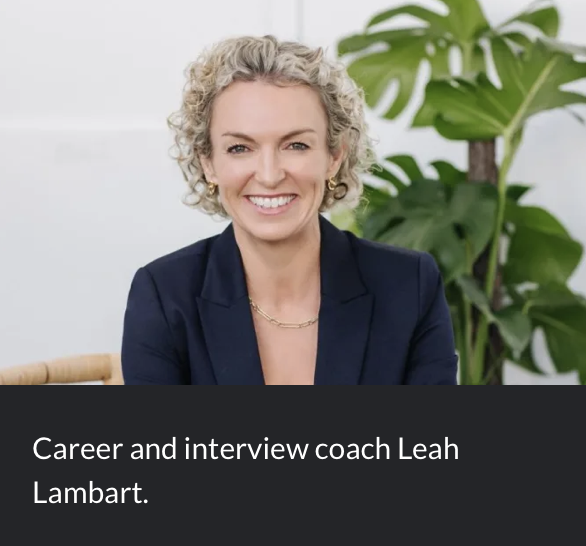
Leah Lambart, Career & Interview Coach at Relaunch Me, shares her top 10 tips to succeed in your graduate or internship role.

“When they move into a leadership role, it’s really important that they develop those soft skills as well. This allows them to build relationships with their employees, colleagues and customers, but also to influence change and to lead people through change,” she says.
Here she shares five ideal leadership traits and ways to develop them.

Blame the RBA: A Career coach on exactly how you should ask for an inflation pay rise.
When is the right time to ask for an inflation pay rise? Should you mention the cost of living? And how much should you be asking for?
“Labour experts would suggest that somewhere between 4.6 – 5.2% would be a starting point if you are looking for a pay rise to reflect the rate of inflation,” says Leah Lambart, a career coach at career guidance company, Relaunch Me.

I’m not passionate about anything, so how do I pick a career?
The importance of our careers can often be overinflated. Hustle culture is at an all-time high and our capitalistic values may lead us to think we need to be ‘productive’ to be ‘purposeful’. So, you might as well choose work you love to make things more bearable.
It’s true; if you’re passionate about your work, you’re more likely to feel personal fulfilment and satisfaction. But our occupations shouldn’t be central to our identities and our passions can be pursued outside of paid work.

8 lessons on asking for a pay rise, according to the women giving them
The idea of asking for money—more money than you’re already being given—is something women in particular find really challenging. It requires you, the employee, to go to your boss and tell them why you’re good at your job, why you’re a valuable asset to the company, and why you deserve to be paid more—essentially, you need to sing your own praises and make a bit of noise, which are things women have been conditioned not to do.
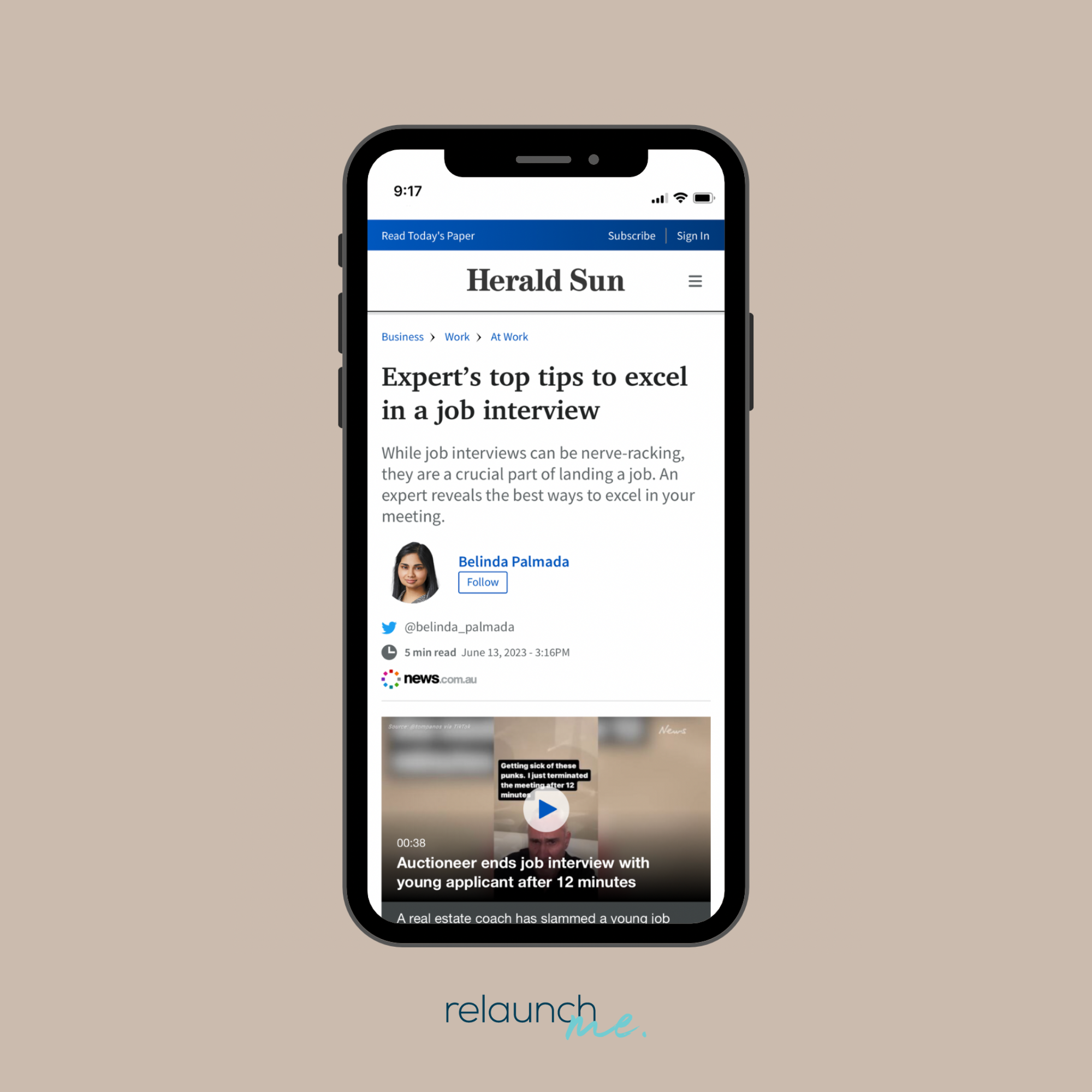
Top tips to excel in a job interview
Research from employment marketplace SEEK found that 21 per cent of job seekers get stressed before interviews because they don’t know what questions will be asked.
While interviews can be nerve-racking at times, they are a crucial part of landing a job.
So, how do you excel in a job interview?

the first 4 things to do if you’ve just been laid off.
Redundancies are sweeping across major companies in Australia right now, including Meta, Twitter, Amazon and Salesforce. If you are sadly among those affected by the lay-offs, you may be wondering what to do next.
“The first thing to do is to remind yourself – it was your position that was stood down, not you,” says Leah Lambart, career coach at Relaunch Me. “Know that this is not personal — it’s the result of a business decision and has nothing to do with you as a person. Redundancies are common, and there’s nothing to be ashamed of.”

Career Cushioning could help keep you in a job, so how do you do it?
A new trend is sweeping across workplaces around the world and it could help you stay in a job — it’s called career cushioning and involves future-proofing your career.
The hiring rate in Australia is down (-14% YOY) and 29% of leaders say they plan to cut headcount, says new LinkedIn data. As a result, according to a poll by the platform, 53% of the 1,700 surveyed said they are actively learning, while an additional 35% said they would like to add new skills. A mere 10% said they are comfortable in their current role.

Ever Wondered What Career Coaches Do (and if you need or should be one)?
Is ‘career coach’ one of those job title you’ve heard of, but have no idea what the role actually entails? It’s one that’s gained popularity in recent years during ‘The Great Resignation’ and you might be left questioning whether you need one.
Or maybe on the flip side, considering whether you could act as a coach for others and bring in a second income stream.
Whether you’re starting fresh or looking to elevate your career, a career coach can be your guiding light! In an interview with ‘The Latch’ I also discuss the profession of a Career Coach!
Not everyone leaves a job with a giant novelty card and a gift voucher, and if you depart under a cloud the question of how to explain it to future job interviewers is a thorny one.
But whether it was a simple personality clash with a superior or something more serious like misconduct, the only way to deal with it is head on, according to career and interview coach Leah Lambart from Relaunch Me.
For this week’s Ask Lifehacker, we’ve got some advice from SEEK Career Coach Leah Lambart on how to make yourself more employable.

It seems like all anyone is talking about at the moment are jobs, employability and the workforce. That’s probably because the Australian Government held the Jobs and Skills Summit last week, and there were some really interesting insights into the current employment landscape in the country. But for people looking for a new job or struggling to find one, we’ve got some great tips on how to make yourself more employable.
For this week’s Ask Lifehacker, we’ve got some advice from SEEK Career Coach Leah Lambart on how to make yourself more employable.

In the latest instalment of ‘things people have been doing for ages but have now been given a name thanks to TikTok’, ‘rage applying’ is currently trending on the platform.
Hot on the heels of other TikTok-originating career trends like quiet quitting and career cushioning, Gen Z-ers and younger Millennials are sharing their stories about how they aren’t being appreciated in their roles, prompting them to apply to other jobs so they can leave their current situations.
It seems like all anyone is talking about at the moment are jobs, employability and the workforce. That’s probably because the Australian Government held the Jobs and Skills Summit last week, and there were some really interesting insights into the current employment landscape in the country. But for people looking for a new job or struggling to find one, we’ve got some great tips on how to make yourself more employable.
For this week’s Ask Lifehacker, we’ve got some advice from SEEK Career Coach Leah Lambart on how to make yourself more employable.

Have you already dismissed the temptation of a career change because you assume it means further study (and frankly, who has time for that)? Career coach Leah Lambart shares how to overcome those assumptions, explore new career options, and begin realigning your vocational pathway.

As we crawled towards the end of last year, a career rev-up was the last thing on many of our minds. (Much bigger priorities: sleep, beach, fun, family, friends and relaxation).

“If you don’t have natural empathy, dealing with patients over an extended time can become very tiresome as this is not a natural strength,” says Leah Lambart, Melbourne-based owner-director of a career coaching firm.

For workers in their late 20s or early 30s, deciding whether to enter management is a common dilemma explains Melbourne-based career coach Leah Lambart.

Leah Lambart, founder of Relaunch Me, says that social media has completely changed the game when it comes to keeping up appearances.
Lambart says she often sees clients who look successful online but are not earning enough money to pay the bills.

NEWS.COM.AU— Redundancy advice: a career coach and psychologist share their tips
While it’s an unfortunate reality due to the current economic climate, career and interview coach from Relaunch Me, Leah Lambart and SEEK’s Resident Psychologist Sabina Read say you can recover professionally and restore your confidence after a redundancy.

Leah Lambart, Career Coach from Relaunch Me, says many people “feel that perhaps their expectations are too high,” and that they should stay in their job even if it makes them unhappy.But the truth is we all deserve to not only be satisfied, but fulfilled by our work.
Leah Lambart, Career Coach from Relaunch Me says resumes that are achievement-focused help employers discover how you have been successful in your previous roles. “Add key achievements under each of your most recent positions,” advises Lambart. This doesn’t necessarily have to include awards bonuses or promotions, but rather how you have made a difference to the business.

Advancing through a job application process can be thrilling, but sometimes you can get swept up in the moment and forget to find out all of the important information before you say yes to a job offer.

To help you out, we asked Matt Harrison, Managing Partner at Hope & Glory Executive, and Leah Lambart, Career Consultant at Relaunch Me, what to look out for and ask your prospective new employer.

Leah Lambart is a Career Coach from Relaunch Me and an expert when it comes to achieving career goals. Here are her five key tactics for setting realistic, achievable goals for your working life.
“Many job search coaches would say that networking is the most important and most effective way of landing your dream job,” says Leah Lambart, career coach at Relaunch Me. “Essentially, networking is about finding a job via who you know, rather than what you know.”

Leah Lambart, Career Coach from Relaunch Me, has worked with many people who have had to leave their places of work for a range of reasons. Here are her tips for talking about why you were let go.
“Think about the skills you’ve gained and the wins you’ve had,” Lambart advises. “Remember to document these on an ongoing basis to remind yourself of how much you’ve achieved even when you have bad days.”

Just how important are tailored resumes, squeaky clean social media profiles and comprehensive cover letters? We asked employers to share – and you might be surprised at their answers.
There are many reasons why career satisfaction is important, says Leah Lambart from Relaunch Me. “We spend so much time at work that being in a career that isn’t enjoyable or satisfying can have a very detrimental effect on our overall being.” Many people suffer from lack of confidence, stress and anxiety due to working in jobs that aren’t aligned with their strengths, interests or values.
“Some people have no problem doing this, but others find it extremely difficult and feel almost compelled to accept an offer, particularly if the recruitment process has been quite drawn out and involved,” says Leah Lambart, Career Coach at Relaunch Me.
Leah Lambart of Relaunch Me says, “Everyone seems to be on the treadmill; working late, coming in early, eating at their desks and working weekends. The problem is that lack of work-life balance over an extended period can lead to burnout, so it’s important to recognise the symptoms ahead of time.”
Many of us start a new year by setting resolutions or goals, but as time goes by we don’t always achieve them. We may have set too lofty a goal, or too many different resolutions at once, that we don’t know where to begin.

Do you ever get the feeling you’re self-sabotaging? Do you catch yourself dwelling on negative thoughts that you know you shouldn’t be thinking? The truth is, many of us do. But toxic thoughts are something successful people avoid for a reason: they harm your career.

Dramatic changes in the job market – and the way we live – have left many of us re-thinking our priorities in the wake of COVID-19, and doing some soul-searching into what really matters. And for many of us, it isn’t money.

Change to our working lives, routines, and the world around us can be hard – and it has been for many of us during COVID-19. But this kind of upheaval can also do something else: it can make us stop and reassess the way we’re living our lives and what we really want – including in our work.

If you’re concerned about job security, a career change to a whole new industry could seem tempting.
In fact, 41% of Australians have been rethinking their career due to COVID-19, SEEK research reveals.
But before you leave a job to make a swift move to a new industry, there are six potential pitfalls to consider. Leah Lambart, career coach at Relaunch Me, gives her insights.

“COVID-19 has caused uncertainty for many job seekers and while you may be concerned about your job options, it’s still important to consider whether a position is the right fit for you at the moment,” says SEEK’s Resident Psychologist Sabina Read.
Here Read and career and interview coach Leah Lambart share when and how you should consider turning down a job offer.

We asked Leah Lambart, Career and Interview Coach at Relaunch Me and Greg Kouwiloyan, Director at Method Recruitment Group for their tips on talking about skills in an interview setting.
We got a career counsellor to answer all your COVID employment woes
Leah Lambart is a career and interview coach, and the director of Relaunch Me, a Melbourne-based service that helps people find more meaningful and fulfilling work. From recent school leavers to people in their 50s and 60s, Leah and her team have been assisting people to find their ‘career sweet spot’, where strengths and interests collide, since 2014.

Career coach Leah Lambart says there are numerous career management strategies that workers can adopt to stay ahead of the competition.“Now is the time to really work on your skills,” Lambart says.When business does resume, there will be a lot of competition for jobs but if you can show recruiters how you worked on your skills during this period you will be in a much better position.”

Providing a potential employer with extensive insights or work samples can constitute free consultancy. Candidates might be asked to complete a cost-benefit analysis or review a set of accounts, says Melbourne-based career and interview coach and Relaunch Me director, Leah Lambart.

While salary is always important, other strategies can be used to attract candidates. The most sought-after perk is flexibility, says Leah Lambart, a career and interview coach and founder of Relaunch Me. Employees value “some leeway that allows them to attend a school event or go to an appointment without being made to feel guilty about it”.

Leah recommends assessing your own strengths and weaknesses to find out exactly what you can bring to a new role.“Before you go out to market you need to be able to identify, understand and articulate your key transferable skills and how you can apply them to your ideal role or industry. Brainstorm with a career coach or friend to get a list of your transferable skills”.
Lost your job because of the coronavirus? We spoke to a Melbourne careers expert and heard from Melburnians who made the switch to new employment. Here’s what they said.

Does burnout mean it’s time to check out – or are there ways to come back brighter and stronger? Career Coach Leah Lambart says nursing has many transferable skills, but challenging times don’t always signal the end of a career.